

A quant prep tool makes $3k/month. Here’s how to build one in another field.
The demand pattern underneath, and how to build your own.

I find internet businesses with proven, verified revenue, then break down the demand pattern underneath and show how you'd build your own version with AI and land the first customers. One business per issue. Here's this week's.
01 — The Find
Quantt helps people land quantitative finance jobs through an interactive, build-it-yourself learning platform. You write and run real Python in the browser, build projects like a trading engine and an options pricer, and follow a structured roadmap toward a quant role.
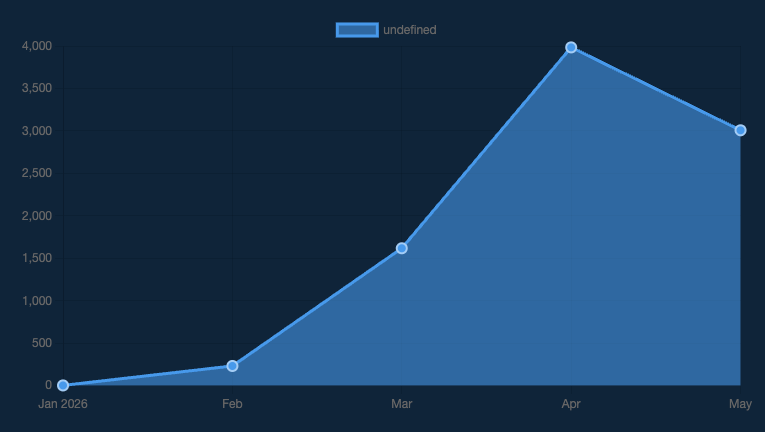
Listed at around $3k/month on IndieHackers. Launched early 2026, first paying customer end of January. A small founding team, all engineers.
02 — The Proof
The economics are obvious, which is the whole point.
Quantt sells against a brutally expensive incumbent path. The CQF runs £20,000+. The CFA is over $1,000 per level across three levels. And it points toward a career where salaries run £95k to £210k.
When the alternative costs thousands and the payoff is a six-figure job, £40/month is not a real decision. It is career insurance.
That is the signal. People are not paying for “content.” They are paying to reduce uncertainty before a high-stakes career move.
03 — The Real PMF
This is not “quant interview prep.” Read past the surface.
The transferable pattern is: high-value career paths have opaque selection processes, and candidates pay to reduce uncertainty.
The formula:
High-value outcome + confusing path + fragmented information = paid prep product.
That is the thing worth taking to another market. Not the quant tool. The pattern underneath it.
04 — The Build Angle
This works in any career path where the prize is high, the process is unclear, and the existing prep is scattered across YouTube, Reddit, and overpriced certifications.
Where the same pattern lives: AI engineer prep. Microsoft Dynamics / Power Platform prep. PE analyst prep. SaaS sales and GTM interview prep. Cybersecurity analyst prep. EU product manager prep. Data engineering interview prep.
Don’t pick the biggest market. Pick the one where you have an unfair advantage, because the product is never just the course, it’s the trust and distribution behind it. Ask one question: which of these worlds do I already have a way into?
If you’ve hired or recruited in a field, you have a talent angle. The prep tool becomes a funnel that feeds placements, not just a course, which is a far stronger business than content alone.
If you work in the field, you have credibility and real content nobody can fake. That’s the whole game in a high-stakes career decision.
If you have an audience or community in an adjacent space, you have free distribution and don’t have to buy your first customers.
If you have delivery capacity (a team, partners, a way to actually coach people), you can sell done-with-you prep, not just static lessons.
So the move isn’t “build the quant clone.” It’s: take this pattern into the one career field where you already have credibility, an audience, a hiring angle, or delivery muscle. That edge is what turns a generic AI-built course into something that converts, and into something a competitor can’t easily copy. Pick the vertical that matches your edge, not the one with the biggest headline number.
05 — The AI MVP
Build the first version in about a week. You are assembling, not engineering. To make this concrete, the example below runs with one vertical, Microsoft Dynamics / Power Platform prep, but swap in whichever field matches your edge.
Stack: Lovable or Replit for the front end and auth. Claude Code if you want tighter control over the logic. Supabase for the database and user accounts. Stripe for payments. Pyodide if you want to run real code exercises in the browser with no backend, the same trick Quantt uses, and it’s free.
Build order:
Days 1–2: Landing page plus email capture. One headline, the offer, a waitlist or pre-order button. Ship this first so you can test demand while you build the rest.
Days 3–4: The core loop. 15–20 interview questions, 3–5 interactive case exercises, a certification roadmap page. Optional: a simple AI mock-interview bot and a CV checklist.
Day 5: Stripe checkout at one price. Ship it ugly.
What the user actually sees: they land on the site, pick the role they’re targeting, answer 10 interview questions, run 3 practical exercises in the browser, get a score with a short readout of where they’re weak, and are offered a $99 prep call to close the gaps. That’s the whole product. If you can picture that flow, you can build it.
The prompt to start with: “Build a Microsoft Dynamics / Power Platform interview-prep web app. Use quantt.co.uk as inspiration for layout, structure, and quality, but for the Microsoft-stack career path, not quant finance. Landing page with email capture. A practice section with 15 questions and 3 in-browser exercises. A certification roadmap for PL-200 and AI-900. A Stripe checkout for a $49 beta. Supabase for auth and progress.”
Pointing the AI tool at a real, working example is the single biggest quality upgrade you can make to a build prompt. A cold description gets you generic output; “match this site’s structure and quality” gets you something that actually looks shippable.
Do not build accounts, dashboards, teams, or admin panels yet. Sell the outcome first, the platform comes after people pay.
What you’re selling now: not a subscription. A $49 beta or a $99 prep call. Pick one, put a checkout behind it.
06 — Find Your First 3 Customers
This is the part every other breakdown skips. You don’t need a campaign. You need three people to pay. Here’s the actual plan, continuing the Dynamics example, swap the buyer and channels for your vertical and the structure holds.
The buyer: consultants and developers moving into the Microsoft Dynamics / Power Platform world, career changers targeting their first D365 consultant role, and people studying for PL-200 or AI-900 who want to actually pass an interview, not just an exam.
Channel 1 — Organic communities (free, do this first).
Your buyer lives in specific places: the r/Dynamics365, r/PowerPlatform, and r/MSDynamics subreddits, the Power Platform Community forums, Microsoft-stack Discord and LinkedIn groups, and LinkedIn itself filtered for “D365 consultant,” “Power Platform,” and recent certification posts.
Don’t drop a link, you’ll get removed. Spend two weeks answering real questions, then post one genuinely useful free resource: “15 Dynamics 365 consultant interview questions that test real thinking, not memorization.” Soft CTA: “I’m turning this into an interactive prep tool, reply or DM if you want early access.” Expect, if the niche is real, 5–20 email signups from one strong post plus a few DMs. Three good posts with zero response means the buyer isn’t here, change it or kill it. This is your highest-signal test and it costs nothing but time.
Channel 2 — Niche newsletter sponsorships (cheap, fast, underused).
You pay a small newsletter to mention you. Find them on Paved (filter for tech/Microsoft/IT careers), Swapstack, beehiiv’s ad network, or email small operators directly, the tiny lists aren’t on any marketplace and are the cheapest. Expect to pay $100–500 per send for a 5–30k-subscriber list. A 15k Microsoft-careers list at $250 might send 75–300 visitors; at a 5% page conversion that’s 4–15 leads from one send. Direct-to-operator deals beat marketplace prices, always ask.
Channel 3 — Google Search ads (paid, highest intent).
People searching “PL-200 exam prep” or “Dynamics consultant interview questions” are pre-qualified. Run a Search campaign (never Display, that’s junk traffic). Target exact and phrase-match keywords, not broad. Start $20–30/day with manual CPC bidding, cap around $2–3 per click. Expect CPC of $1–4 and a strong 8–15% email conversion because intent is high. The catch: narrow-niche search volume is small, great quality, limited quantity.
Channel 4 — Meta ads (paid, run last).
For a slow-consideration education product, ads don’t create demand, they accelerate a funnel that already works. So run this only after organic shows pull. Setup: Lead-gen objective, one campaign, one ad set, 3–5 creatives, broad targeting with job-title constraints (IT consultant, developer, business analyst, 25–40), email-only signup. Budget $5–17/day, run a full 7 days untouched (the learning phase). Expect CPL of $4–8 while it learns, dropping toward $2–4 if the funnel works; above $8 after two weeks means the page or creative is broken, not the audience. Install the Meta pixel and Conversions API before you spend, or iOS users vanish from your data. Best creative: a 15-second screen recording of the product doing something real. Outcome footage beats a talking-head pitch.
The kill / continue rule.
“Worked” is not clicks. It is not even email signups. It is 1–3 people who pay, book a call, or seriously try to buy. Run organic plus one newsletter send first, under $300 total. Get real pull, then layer in Google and Meta. Get genuine buyers, build v1 properly and scale whatever channel converted. Get nothing after real organic effort plus a small paid test, change the buyer or kill it.
07 — The Verdict
Opportunity Signal: 7/10 — Solid demand, low build cost, content-quality risk
Tags: Real demand · Content-quality risk
Best path: vertical career prep, taken into a field where you have an edge. Best monetization: paid beta and prep calls first, course or software later. First move: pick your vertical, ship a landing page and a free interview-question resource into that field’s communities this week.
Biggest risk: trust and content quality. Generic AI content will not convert against a real career decision. This only works if the material feels specific, practical, and closer to the actual hiring process than free YouTube, Reddit, or the certification docs. If you can’t make it better than free, don’t build it.
It scores a 7 and not higher for one honest reason: the original only proves $3.3k a few months in, so the demand is real but young, and the whole thing rests on content quality you’d have to nail. The score also depends entirely on you. If you have a genuine edge in some career field, an audience, real credibility, a hiring angle, this is a 7. If you’d be entering a field where you have no advantage and competing on content alone, drop it to a 5.
The opportunity is not to copy Quantt. It’s to take the economics behind Quantt into a market where you have an unfair distribution or delivery advantage.
What are your next steps
Pick the one career field where you already have an edge: you’ve recruited in it, work in it, have an audience near it, or can actually coach people in it.
Write a free resource for that field: “15 [role] interview questions that test real thinking, not memorization.”
Spend two weeks being useful in 2–3 of that field’s communities, then post the resource with a soft “building a tool for this, DM for early access.”
If you get real interest, stand up a one-page landing site with an email capture and a $49 pre-order.
Only when people pre-pay, build the MVP. Not before.
If step 3 gets you nothing after genuine effort, you’ve spent two weeks and zero money to learn the idea isn’t there. That’s the test working, not failing.
Good luck!